


Single-visit ceramic restorations are built around a simple idea: use precise digital tools to design, mill, and place a durable, natural-looking restoration in one appointment. For patients, that translates to fewer visits, less time in temporary restorations, and a streamlined experience that fits into busy lives. Clinically, the process reduces the chances for lab errors or impression misreads that can sometimes occur with traditional workflows.
Beyond convenience, same-day restorations emphasize conservative dentistry. Because the restoration is designed from a detailed digital scan, clinicians can plan a restoration that preserves more healthy tooth structure while still achieving excellent fit and function. This conservative approach helps maintain long-term tooth strength and can simplify future care if additional treatment is needed down the road.
The overall patient experience is also improved: digital scanning avoids messy putty impressions, and chairside milling is quieter and faster than many people expect. For adults and families who value predictable, efficient care, same-day ceramic restorations often represent a practical and patient-centered option.
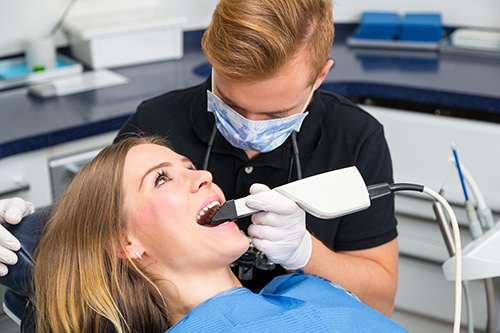
A typical CEREC visit begins with a thorough exam and preparation of the affected tooth. After removing any decay and shaping the tooth for optimal retention, the dentist captures a high-resolution, three-dimensional scan of the prepared surface and the surrounding bite. These digital images replace traditional impressions and provide the designer software with precise data to plan the final restoration.
Using computer-aided design (CAD), the clinician refines the shape, contacts, and occlusion on-screen, matching shade and contours for a natural appearance. Once the design is approved, the data is sent to an in-office milling unit that carves the restoration from a solid ceramic block. Milling typically takes less than an hour, after which the restoration can be finished, stained or glazed if needed, and tried in for fit.
Placement is the final step: the dentist checks the fit and bite, makes any minor adjustments, and uses adhesive techniques to bond the restoration permanently. Because the entire workflow occurs in the office, patients walk out with a final, polished restoration the same day—no temporary crowns and no waiting period between appointments.
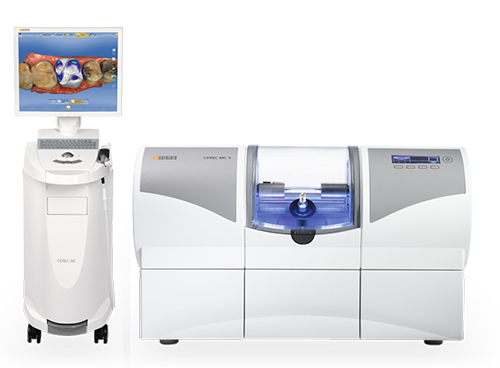
CEREC integrates intraoral scanning, CAD software, and chairside milling to create restorations with tight margins and accurate contacts. The digital scan captures minute details of the prepared tooth and the way teeth come together, which the design software uses to simulate function before anything is milled. This virtual preview helps avoid unexpected adjustments at placement and ensures the restoration fits harmoniously with neighboring teeth.
The milling process uses high-strength ceramic materials chosen for their durability and aesthetic properties. Because the restoration is fabricated from a single block, it lacks the internal interfaces that can sometimes weaken layered restorations. Modern ceramics also allow excellent shade matching and translucency, so a CEREC crown, inlay, or onlay can look very similar to natural enamel.
From an infection-control standpoint, eliminating temporary restorations and additional lab handling reduces opportunities for contamination or material mismatches. The combination of digital accuracy and advanced ceramics yields restorations that are both functional and esthetic while supporting long-term oral health.

CEREC restorations are crafted from contemporary dental ceramics designed to resist wear while maintaining a lifelike appearance. With proper care—regular brushing, flossing, and routine dental checkups—these restorations perform well for many years. Their color stability and polished surfaces help resist staining and blend seamlessly with adjacent teeth.
Maintenance is straightforward: treat the restoration like a natural tooth. Maintain your home care routine and attend periodic professional cleanings so the margin between tooth and restoration remains healthy. If you grind your teeth or have heavy bite forces, discuss protective measures such as a night guard; these devices help extend the life of any restorative work.
Should the restoration ever require repair or replacement, its digital record remains valuable. The original scan and design can be referenced to recreate a consistent restoration more easily than with analog records—a benefit both for clinical continuity and for patients seeking efficient follow-up care.
Many patients are excellent candidates for CEREC restorations, particularly when a single tooth needs a crown, inlay, or onlay due to decay, fracture, or a large filling that needs replacement. Because the technology allows precise fits and conservative preparations, it is often preferred when preserving as much natural tooth as possible is a priority. The decision always begins with a clinical evaluation to assess the tooth’s structural integrity and overall bite dynamics.
There are situations where alternative workflows or materials may be recommended—for example, when extensive multi-unit restorations, complex lab-fabricated esthetic requirements, or specialized implant prosthetics are involved. In those cases, a collaborative treatment plan that may include lab support ensures the best long-term outcome. The best approach is individualized: the dentist will outline the clinical reasoning and expected benefits for your specific condition.
Patients with dental anxiety find the single-visit model reduces the time spent in the chair across multiple appointments, and those who value efficiency appreciate the reduced number of visits. The practice will always review options, explain clinical trade-offs, and help patients choose the restoration strategy that aligns with their health goals and lifestyle.
Before any restoration is placed, a thorough exam and imaging help the dentist confirm that CEREC is the appropriate solution. Preparation typically involves removing decay and shaping the tooth to create a stable foundation. Digital records created during the visit are archived and can inform future care, which supports continuity and precision for follow-up treatments if needed.
After placement, most patients notice immediate improvements in comfort and chewing function. Because the restoration is bonded directly to the tooth, it provides strength and a sealed margin that helps protect against recurrent decay. Slight sensitivity can occur after preparation, but this usually subsides within a few days; if sensitivity or discomfort persists, contact the office so the team can evaluate and make minor adjustments if necessary.
Long-term success depends on routine maintenance. Regular dental visits allow the dentist to monitor the restoration, check occlusion, and address any wear patterns early. By combining good home care with periodic professional oversight, patients can enjoy the benefits of a natural-looking, long-lasting restoration for many years.
Amelia East Family Dentistry offers experienced, patient-focused care using modern digital workflows to deliver efficient, high-quality ceramic restorations. If you’re curious whether same-day CEREC restorations are a good fit for your smile, contact us for more information and to schedule a consultation.
Today, there's no need to merely imagine how nice it would be to have a dental crown fabricated in a single visit. With CEREC technology and advanced systems of care, multiple trips to the dentist are a thing of the past! Now, one appointment is all it takes for our skilled and experienced dentist to design, fabricate, and place a naturally beautiful and long-lasting same-day crown. And, best of all, unlike conventional methods of care, you won't have to endure messy dental impressions, wear a temporary crown, or wait weeks for your permanent restoration to come back from the laboratory.
Offering a level of precision and comfort that exceeds conventional methods of care, CEREC technology is nothing short of amazing! Advanced CAD/CAM technology, which stands for computer-aided design and computer-aided manufacturing, enables our dentist to translate images from an optically scan tooth into a 3D virtual model upon which a custom crown can be digitally designed. Once this step is done, the detailed specs are then wirelessly transmitted to a chairside 3D milling machine to fabricate your new ceramic crown while you wait!
With conventional methods of care, a dental crown can take two to three visits to fabricate and place. However, thanks to the benefits of CEREC technology, we can prepare a tooth, then design, fabricate, and place your new crown, all while you wait.
With CEREC same-day crowns, there's none of the mess of conventional dental impressions, wearing dental temporaries, or waiting for the final crown to come back from the lab. Once the prepared tooth is optically scanned and the restoration digitally designed, your new crown can be milled from the highest quality of dental ceramics that very same visit.
CEREC same-day crowns and restorations are fabricated from the highest quality of dental ceramics. Because dental porcelain reflects light in much the same way as dental enamel, your new crown will look flawless, completely natural, and blend seamlessly with your smile.
A CEREC same-day crown offers much more than a convenient approach to getting a dental crown. It is also a high quality, naturally beautiful, extremely durable, and long-lasting dental restoration! The fact is, with proper oral hygiene and routine dental care your new crown will serve your smile well for many years to come.
CEREC is a chairside CAD/CAM system that combines intraoral scanning, computer-aided design, and in-office milling to create ceramic restorations in a single visit. The clinician captures a high-resolution digital scan of the prepared tooth and surrounding bite, then refines the restoration on-screen using design software. Once the design is approved, a milling unit carves the restoration from a solid ceramic block and the dentist finishes and bonds it that same day.
This workflow replaces traditional putty impressions and off-site lab fabrication for many single-tooth restorations. Because the restoration is produced from a single ceramic block, it often has excellent marginal fit and structural integrity. Digital records of the scan and design are archived, which aids future care or recreation of the restoration if needed.
Same-day ceramic restorations reduce the number of appointments by combining preparation, design, milling, and placement into one visit. Patients avoid temporary crowns and the inconvenience of return visits while receiving a durable, natural-looking restoration in a predictable timeframe. The digital workflow also reduces opportunities for lab-related errors and impression remakes.
Clinically, CEREC supports conservative tooth preparation because the design is based on a precise digital scan. The process improves patient comfort by eliminating messy impression materials and often results in less chair time overall. For busy families and adults seeking efficient care, the single-visit model streamlines treatment without sacrificing quality.
Digital scanning captures a three-dimensional image of the prepared tooth and surrounding dentition instantly, allowing the clinician to assess margins and occlusion on-screen. Traditional impressions rely on physical materials that can distort or require retakes; digital scans are easily reviewed and corrected during the appointment. The virtual design also lets the dentist simulate contacts and function before anything is milled.
After design approval, the in-office milling unit fabricates the restoration from a single ceramic block, which can reduce internal interfaces found in some layered restorations. Milling is completed quickly and the restoration can be stained, glazed, or polished chairside for an aesthetic match. The end result is a tightly fitting restoration produced with immediate quality control and fewer external variables.
Many patients are excellent candidates for CEREC crowns, inlays, and onlays when a single tooth requires restoration due to decay, fracture, or a failing filling. The technology is particularly well suited when preserving healthy tooth structure is a priority because digital planning supports conservative preparations. Patients who prefer fewer appointments or who experience anxiety about multiple visits often appreciate the single-visit option.
There are clinical situations where alternative approaches may be preferable, such as extensive multi-unit restorations, specialized implant prosthetics, or highly customized laboratory work for complex aesthetic cases. The decision begins with a thorough examination and imaging so the dentist can recommend the most appropriate treatment. At Amelia East Family Dentistry the team evaluates each case individually and explains the clinical reasoning behind their recommendations.
A typical appointment starts with a focused exam, removal of any decay, and preparation of the tooth to create a stable foundation for the restoration. The dentist then takes a digital scan of the prepared tooth and the opposing bite, refines the restoration design using CAD software, and confirms shade and contours. Once the design is finalized the milling unit fabricates the restoration while the clinician prepares for finishing and placement.
After milling, the restoration is tried in, adjusted for fit and occlusion as needed, and then permanently bonded using adhesive techniques. Most patients notice immediate improvement in comfort and chewing function because the final restoration is placed that same day. Any slight sensitivity after preparation typically resolves within a few days, but the office encourages patients to call if concerns persist.
CEREC restorations are milled from contemporary dental ceramics chosen for strength and aesthetic properties, and they perform well when maintained with proper oral hygiene. Regular brushing, flossing, and routine dental checkups help protect the margin between tooth and restoration and reduce the risk of recurrent decay. The polished surfaces resist staining and, with reasonable care, these restorations can last for many years.
Treat a CEREC restoration like a natural tooth: maintain consistent home care and attend periodic professional cleanings so the dentist can monitor wear patterns and occlusion. If you grind your teeth or exert heavy bite forces, discuss a protective night guard with the dentist to prolong the restoration's life. Prompt evaluation of chips, looseness, or ongoing sensitivity helps address issues before they require more extensive work.
Modern CEREC ceramics offer good translucency and shade-matching capabilities that can produce attractive results in many anterior cases. For straightforward cosmetic needs, a well-designed and finished CEREC crown or onlay can blend seamlessly with adjacent teeth. The clinician assesses shade, translucency, and patient expectations to determine whether a single-visit approach will meet the aesthetic goals.
For highly complex cosmetic transformations that require layered ceramics or extensive characterization, a laboratory-fabricated restoration may sometimes be recommended. The dentist will explain the clinical trade-offs and present the best option to achieve the desired appearance while preserving function. Patient input on aesthetic priorities guides the final treatment plan.
CEREC workflows commonly use high-strength monolithic ceramics such as lithium disilicate or modern zirconia, which balance durability and esthetics. These materials are milled from a single block, reducing internal interfaces and providing reliable strength under occlusal forces. Their optical properties can be adjusted with staining, glazing, or polishing to match surrounding teeth.
The choice of material depends on the restoration's location, the patient's bite dynamics, and aesthetic requirements, so the dentist selects the option that best meets clinical needs. Proper bonding or cementation protocols are critical regardless of material to ensure long-term performance. Routine follow-up allows the practice to monitor restoration integrity and respond to any wear or changes over time.
Small surface chips or minor defects can sometimes be repaired with composite or by refinishing and glazing, depending on the material and extent of damage. More significant fractures or recurrent issues may require remaking the restoration to restore ideal fit and function. Because a digital scan and design are archived, remakes can often be produced efficiently with consistent fit and contour.
If repair is attempted the dentist will explain the expected longevity of the repair versus a full remake so patients can make an informed decision. Promptly reporting discomfort, looseness, or notable wear allows the practice to address problems early. The archived digital files support clinical continuity should future replacement be necessary.
Digital scanning reduces physical material handling and eliminates temporary restorations for many cases, which simplifies the overall workflow and decreases opportunities for contamination. The practice follows strict sterilization protocols for hand instruments, scanning tips, and operatory surfaces, and milling units are maintained and cleaned according to manufacturer guidelines. Regular calibration and software updates help preserve scanning and milling accuracy over time.
Staff training ensures consistent scanning technique, precise margin capture, and careful verification of design and fit before milling. Quality control steps such as trial seating, occlusal checks, and polished finishing are part of the standard protocol to ensure the restoration functions harmoniously with the bite. Amelia East Family Dentistry combines these measures with documented digital records to deliver accurate, safe, and predictable single-visit restorations.
Quick Links
